


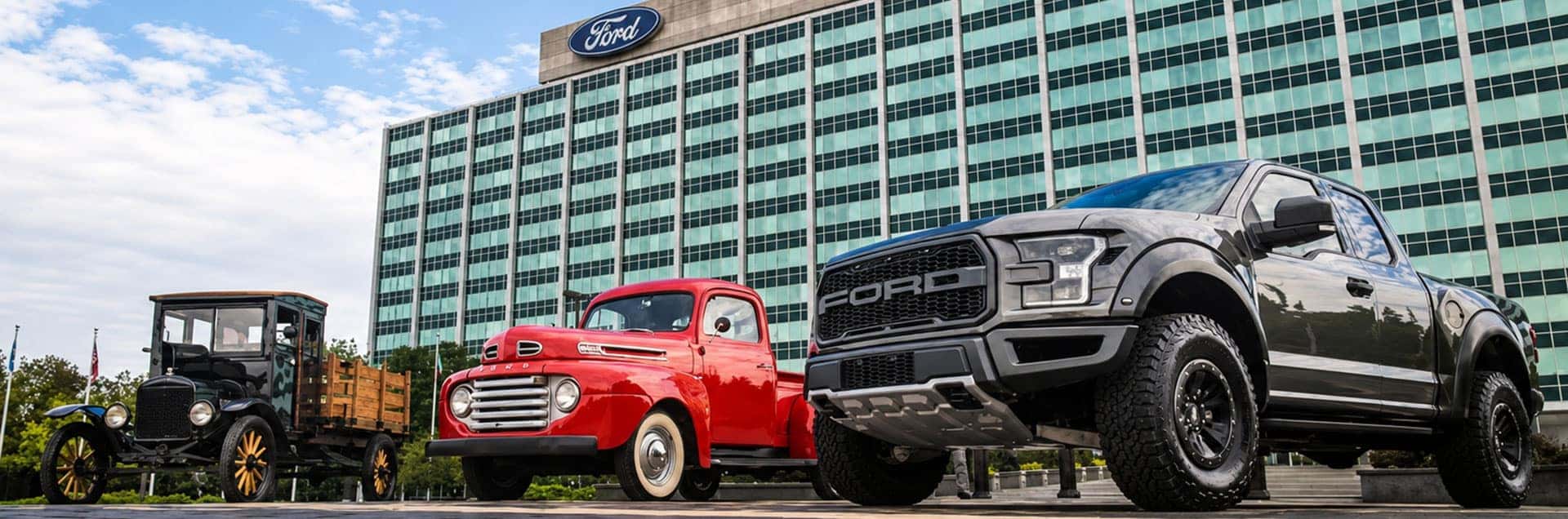
Explore Ford History, Vehicles & Innovation
Ford has shaped transportation for more than a century through manufacturing innovation, influential cars and trucks, performance vehicles, commercial transportation, and new approaches to hybrid and electric power.
Explore Ford’s history from the Model T and moving assembly line to the F-Series, Mustang, Bronco, modern SUVs and trucks, performance engineering, electrification, and available Ford inventory at Sid Dillon.

The Founding of Ford Motor Company
Ford Motor Company was founded in 1903 by Henry Ford and a group of investors. The young company entered an automobile industry that was still developing, with cars remaining expensive and relatively uncommon for many American families.
Ford pursued a different approach centered on simplifying vehicle production and making automobiles accessible to a much larger group of customers. That philosophy would soon lead to one of the most influential vehicles in automotive history.
Early Ford Highlights
- Ford Motor Company founded in 1903
- Henry Ford served as one of the company’s founders
- Early Ford automobiles helped establish the young manufacturer
- Affordable transportation became a central Ford objective
Model T and the Moving Assembly Line
Ford introduced the Model T in 1908. Its relatively simple construction, durability, and increasingly affordable price helped make automobile ownership possible for millions of people who previously could not consider purchasing a car.
Ford transformed manufacturing again with development of the moving assembly line. By organizing production into repeatable operations and moving vehicles between workstations, Ford dramatically reduced the amount of time required to build an automobile.
Model T Highlights
- Model T introduced in 1908
- Designed around durability and simplified operation
- Moving assembly line transformed automobile manufacturing
- Mass production helped reduce vehicle costs
- More than 15 million Model T vehicles were eventually produced

Ford Expands Across New Vehicle Segments
Ford continued growing after the Model T era with new passenger vehicles, commercial products, and international manufacturing operations. The Model A succeeded the Model T and introduced customers to more modern styling and vehicle features.
Ford also expanded into the luxury market by acquiring Lincoln in 1922. Over the following decades, Ford developed a broad range of vehicles serving customers who needed everything from practical transportation to commercial capability and premium automobiles.
Expansion Highlights
- Model A followed the Model T
- Ford acquired Lincoln in 1922
- Passenger and commercial vehicle production expanded
- Ford developed manufacturing operations around the world
- Multiple vehicle categories became part of the Ford portfolio
The Growth of Ford Trucks
Trucks became one of the most important parts of the Ford lineup. Early commercial vehicles demonstrated the usefulness of adapting automotive engineering to hauling, farming, construction, delivery work, and other demanding applications.
Ford introduced the F-Series in 1948. The truck family continued expanding through generations of light-duty and heavy-duty pickups, eventually developing into today’s F-150 and Super Duty lines.
Ford Truck Highlights
- Ford has produced trucks for more than a century
- F-Series introduced in 1948
- F-150 became the core Ford light-duty pickup
- Super Duty expanded heavy-duty capability
- Maverick and Ranger broaden today’s Ford truck range

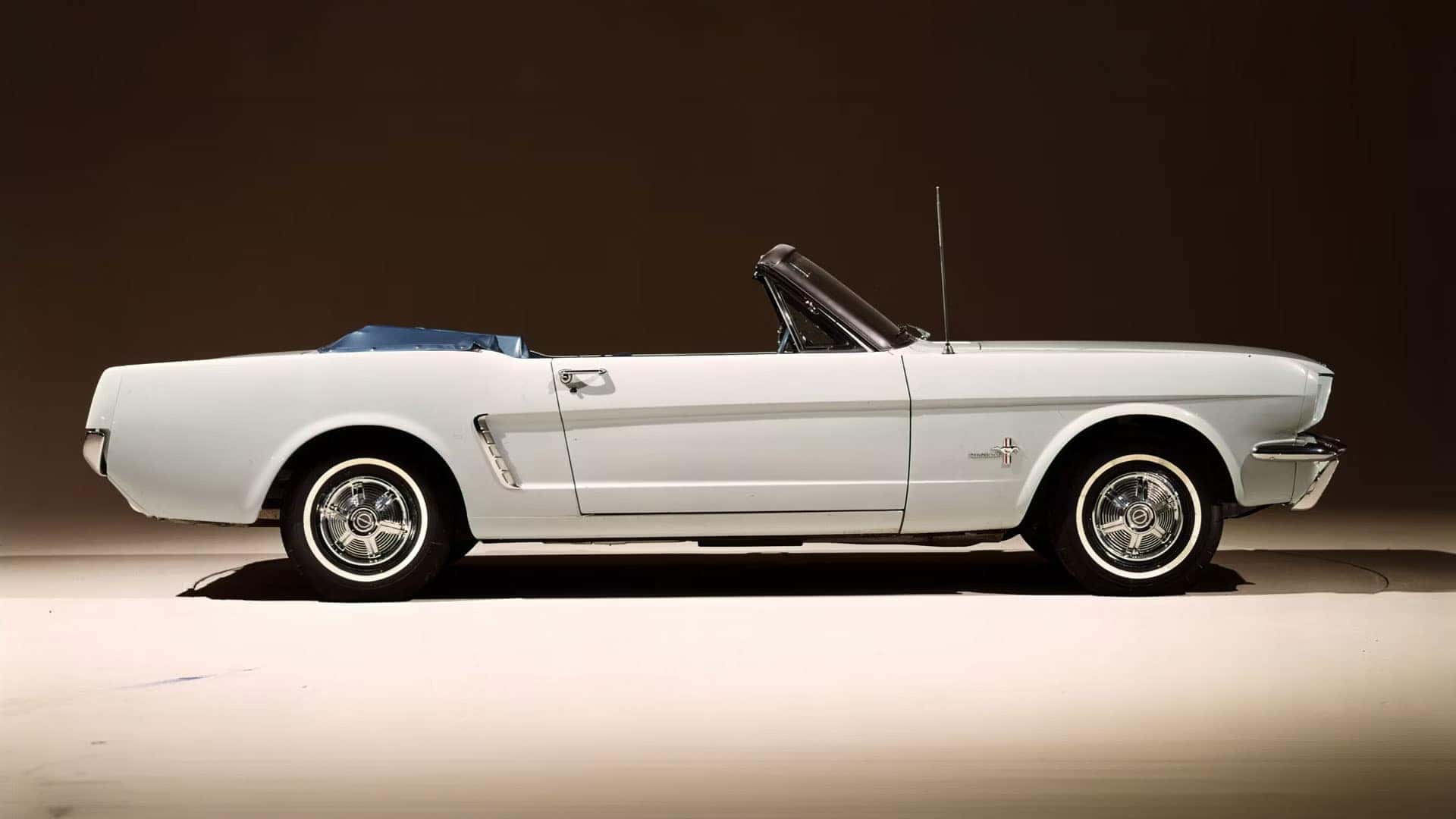
Mustang and Ford Performance
Ford introduced Mustang in 1964, creating a sporty, customizable automobile that quickly developed an identity of its own. The Mustang nameplate would span multiple generations of coupes, convertibles, racing vehicles, and high-performance models.
Mustang remains an important part of Ford performance today. The modern family includes models designed for everyday performance as well as increasingly specialized vehicles influenced by motorsports and track development.
Mustang Highlights
- Ford Mustang introduced in 1964
- Available historically in numerous performance configurations
- Mustang developed a strong motorsports legacy
- Modern Mustang continues Ford’s performance-car tradition
- Mustang Mach-E extends the Mustang family into electric SUVs
Bronco, Explorer and Ford SUVs
Ford’s SUV history includes vehicles designed for very different purposes. Bronco established an off-road identity, while Explorer became an important part of the growth of family-oriented SUVs. Expedition later expanded Ford’s offerings into the full-size SUV segment.
Today’s Ford SUV lineup ranges from compact crossovers and adventure-focused models to three-row family vehicles and full-size SUVs. Bronco and Bronco Sport emphasize outdoor capability, while Escape, Explorer, Expedition, and Mustang Mach-E serve a variety of passenger and utility needs.
Ford SUV Highlights
- Bronco established a long-running Ford off-road nameplate
- Explorer became an influential family SUV
- Expedition provides full-size passenger and cargo capability
- Bronco Sport offers compact adventure-oriented versatility
- Escape offers conventional and electrified powertrain choices


Ford Technology and Connected Vehicles
Ford has continued adapting its vehicles as automotive technology has moved from primarily mechanical systems toward increasingly connected digital platforms. Modern vehicles integrate infotainment, smartphones, navigation, driver assistance, cameras, trailering technology, and connected services.
Technologies such as Ford SYNC helped bring voice-controlled connectivity into the vehicle, while Ford Co-Pilot360 technologies expanded the range of available driver assistance features. Ford BlueCruise has further developed hands-free highway driving capability on compatible vehicles and roads.
Technology Highlights
- Ford SYNC helped expand connected vehicle technology
- Ford Co-Pilot360 includes a range of driver assistance features
- Available BlueCruise supports hands-free highway driving
- Advanced camera systems assist parking and trailering
- Connected software allows supported vehicle features to evolve
Hybrid and Electric Ford Vehicles
Ford’s approach to electrification includes hybrids and fully electric vehicles rather than relying on a single type of powertrain. Hybrid technology is available in vehicles designed for different uses, including SUVs and pickups.
Mustang Mach-E represents Ford’s all-electric passenger SUV offering, while E-Transit applies electric propulsion to commercial transportation. Ford also continues offering hybrid choices in vehicles such as Escape, Maverick, and F-150.
Electrification Highlights
- Mustang Mach-E provides fully electric SUV performance
- E-Transit brings electric propulsion to commercial vans
- Escape offers hybrid and plug-in hybrid configurations
- Maverick offers hybrid truck capability
- F-150 offers available PowerBoost full hybrid technology

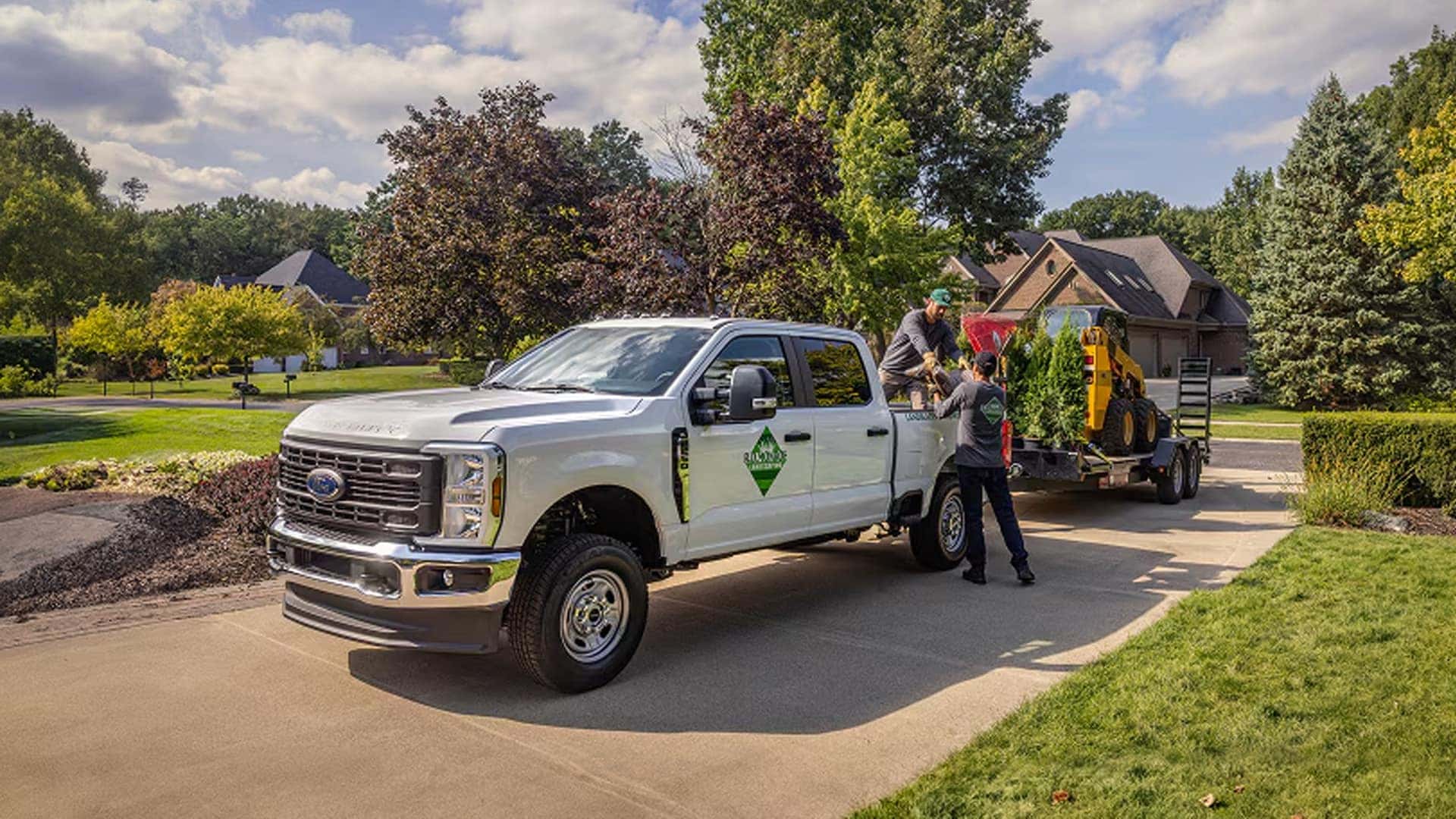
Ford Commercial and Work Vehicles
Commercial transportation has remained an important part of Ford throughout the company’s history. Today’s Ford Pro portfolio extends beyond pickups to vans, chassis cabs, medium-duty trucks, fleet technology, charging solutions, and business-focused services.
Transit provides multiple configurations for cargo, passenger, and commercial applications, while E-Transit offers an electric commercial van option. Super Duty chassis cabs and other Ford commercial platforms support customers who require specialized upfits and demanding work capability.
Commercial Vehicle Highlights
- Ford Transit supports numerous commercial configurations
- E-Transit provides an electric commercial van option
- Super Duty supports heavy-duty work applications
- Ford offers chassis cab and medium-duty commercial platforms
- Ford Pro combines vehicles with fleet technology and services
Browse Current Ford Inventory
Explore our available selection and find the right fit for your needs. Inventory updates regularly, so check back often for the latest availability, trims, and options.
Contact Sid Dillon Ford
Have questions about a Ford truck, SUV, Mustang, commercial vehicle, hybrid, or electric vehicle? Contact Sid Dillon and let our Ford team help you find the right vehicle.
Frequently Asked Questions
When was Ford Motor Company founded?
Ford Motor Company was founded in 1903 by Henry Ford and a group of investors. The company went on to transform automobile manufacturing through mass production and the moving assembly line.
Why was the Ford Model T important?
Introduced in 1908, the Model T helped make automobile ownership accessible to a much larger portion of the population. Ford’s evolving manufacturing methods also helped lower production costs and increase output.
When was the Ford Mustang introduced?
Ford introduced Mustang in 1964. The nameplate has continued through multiple generations and remains an important part of Ford’s performance vehicle lineup.
What Ford trucks are available today?
Ford’s truck lineup includes Maverick, Ranger, F-150, and Super Duty models. Different configurations are available for everyday driving, off-road use, towing, hauling, commercial work, and heavy-duty applications.
What SUVs does Ford offer?
Ford’s SUV and crossover lineup includes Escape, Bronco Sport, Bronco, Explorer, Mustang Mach-E, and Expedition. Availability can vary by dealership and inventory.
Does Ford still make the Edge?
No. Ford has retired the Edge from its current U.S. vehicle lineup. Used and certified pre-owned Edge models may still be available through dealership inventory.
Does Ford still make the Transit Connect?
No. Ford has retired the Transit Connect. Ford’s current van offerings include Transit and the all-electric E-Transit, along with other Ford Pro commercial platforms.
Does Ford offer hybrid vehicles?
Yes. Ford offers hybrid technology across several vehicle types, including Escape, Maverick, and F-150. Powertrain availability can vary by model and configuration.
What fully electric Ford vehicles are available?
Ford’s current lineup includes the fully electric Mustang Mach-E SUV and E-Transit commercial van. Ford continues developing additional electrified vehicles and technologies.
Where can I shop for Ford vehicles at Sid Dillon?
Sid Dillon offers Ford vehicles through its Ford dealerships and online inventory. Use the model-specific links on this page to browse available Ford SUVs, trucks, performance vehicles, and commercial vans.
