


Explore Mazda History, Design & Driving Innovation
Mazda has spent more than a century challenging conventional approaches to vehicle design and engineering. From its beginnings in Hiroshima and the Mazda-Go three-wheeled truck to rotary engines, the MX-5 Miata, SKYACTIV technology, KODO design, and today’s electrified SUVs, Mazda has built a reputation around thoughtful engineering and driver engagement.
Explore Mazda’s history, rotary-engine development, international growth, motorsports achievements, Jinba Ittai philosophy, modern design, hybrid technology, plug-in hybrid vehicles, and available Mazda inventory at Sid Dillon Mazda in Fremont.

From Cork Manufacturing to Motor Vehicles
Mazda’s story began in Hiroshima, Japan, in 1920 with a company originally focused on cork products. The business later shifted toward machinery and industrial manufacturing as it developed new technical capabilities.
Vehicle production began in 1931 with the Mazda-Go, a three-wheeled commercial truck. Compact dimensions and practical carrying ability made vehicles like the Mazda-Go useful for businesses and helped establish the company’s future in transportation.
Early Mazda Highlights
- Company origins date to 1920 in Hiroshima
- Business evolved from cork products into machinery
- Vehicle production began in 1931
- Mazda-Go established Mazda in commercial transportation
- Early exports demonstrated international ambitions
Mazda and the Rotary Engine
One of the most distinctive chapters in Mazda history began when its engineers committed to developing the rotary engine. The compact design offered a different approach to producing power compared with conventional piston engines, but significant engineering challenges had to be solved before it could become a practical production powerplant.
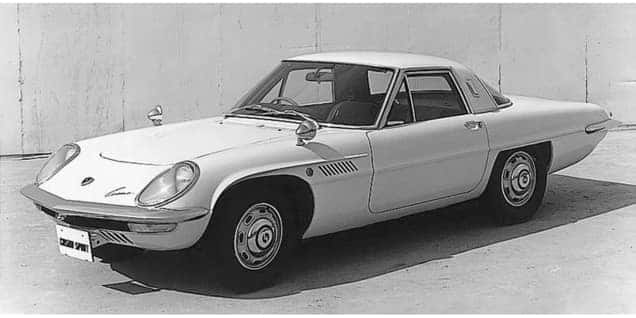
Mazda’s persistence resulted in the Cosmo Sport 110S, introduced in 1967. The vehicle established Mazda as one of the companies most closely associated with rotary-engine technology and began a performance lineage that would later include RX-series sports cars and Mazda’s most famous racing achievement.
Rotary Highlights
- Mazda invested heavily in rotary-engine development
- Cosmo Sport 110S arrived in 1967
- Rotary engines offered compact dimensions and high-revving performance
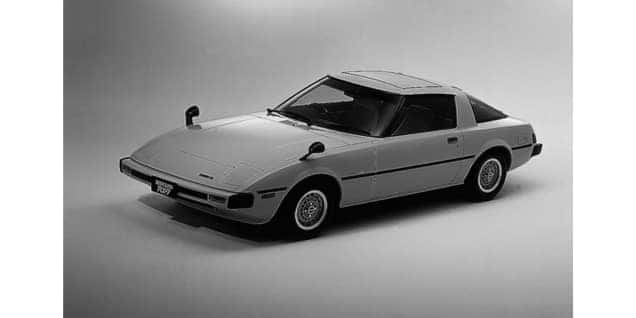
- RX-7 became one of Mazda’s best-known rotary sports cars
- RX-8 continued the rotary tradition into the twenty-first century
Mazda Expands Around the World
Mazda expanded internationally as Japanese automakers gained a larger role in global markets. The company established operations in North America and introduced American drivers to a growing range of compact cars, rotary-powered vehicles, family models, and sports cars.
Mazda’s relationship with Ford later became an important chapter in the company’s development. The two automakers shared technology, manufacturing resources, and vehicle programs for many years before Mazda entered a more independent period of product development.
Global Growth Highlights
- Mazda expanded sales throughout international markets
- North American operations grew during the 1970s
- Rotary vehicles helped distinguish Mazda from competitors
- Ford became an important Mazda business partner
- Mazda later strengthened its independent product strategy
MX-5 Miata and Jinba Ittai
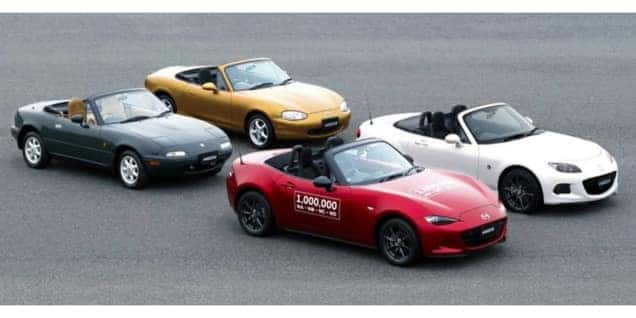
Mazda introduced the MX-5 Miata in 1989 with a simple idea: revive the lightweight, open-top sports car using modern reliability and engineering. The result emphasized low weight, balance, responsive handling, and an uncomplicated connection between the driver and the road.
The philosophy behind the MX-5 is closely associated with Jinba Ittai, a Japanese expression Mazda uses to describe the feeling of horse and rider moving as one. That concept continues to influence the way Mazda develops steering, chassis response, seating position, and vehicle dynamics.
MX-5 Miata Highlights
- MX-5 Miata debuted in 1989
- Designed around lightweight sports-car principles
- Rear-wheel drive contributes to balanced handling
- Available soft-top and retractable-fastback configurations
- MX-5 became the world’s best-selling two-seat open-top sports car
SKYACTIV Technology and Driving Efficiency
Mazda introduced SKYACTIV as a comprehensive approach to improving the automobile rather than concentrating on a single component. Engines, transmissions, vehicle structures, chassis systems, and weight reduction were developed together to improve responsiveness and efficiency.
The philosophy allowed Mazda to pursue better fuel economy while preserving the steering response and driver involvement that had become central to the brand’s identity.
SKYACTIV Highlights
- Integrated approach to engines, transmissions, chassis, and vehicle structure
- Weight reduction supports both performance and efficiency
- Powertrain development emphasizes responsive acceleration
- Chassis engineering supports predictable vehicle behavior
- Technology continues to influence modern Mazda vehicles


KODO: Soul of Motion
Mazda’s KODO design philosophy introduced a more expressive visual identity built around the impression of movement and energy. Sculpted body surfaces, carefully controlled proportions, and simplified details help create vehicles that appear dynamic even while stationary.
The approach also extends inside the vehicle, where Mazda increasingly emphasizes clean layouts, carefully selected materials, driver-focused controls, and reduced visual clutter.
KODO Design Highlights
- KODO means Soul of Motion
- Exterior forms emphasize movement and proportion
- Design favors sculpted surfaces over excessive decoration
- Cabins emphasize simplicity and driver focus
- Japanese craftsmanship influences modern Mazda interiors
The Modern Mazda Vehicle Family
Mazda’s current U.S. lineup has evolved around compact cars, crossovers, larger SUVs, and the MX-5 Miata sports car. Mazda3 continues the brand’s compact-car tradition in sedan and hatchback form, while CX models cover several different SUV sizes and uses.
CX-30 provides a smaller crossover format, while CX-5 and CX-50 serve the compact SUV market with different approaches to everyday and outdoor-oriented driving. CX-70 provides a larger two-row format, and CX-90 serves drivers who need three-row seating.
Modern Mazda Highlights
- Mazda3 is available as a sedan or hatchback
- CX-30 provides compact crossover versatility
- CX-5 emphasizes refined everyday SUV driving
- CX-50 adds a more adventure-oriented SUV character
- CX-70 offers a larger two-row SUV format
- CX-90 provides three-row passenger capability
- MX-5 Miata continues Mazda’s lightweight sports-car tradition
Mazda Hybrid and Plug-In Hybrid Vehicles
Mazda’s current U.S. electrification strategy focuses on hybrid and plug-in hybrid powertrains that complement its traditional gasoline vehicles. These systems give drivers different ways to incorporate electric propulsion without requiring every vehicle to follow the same powertrain approach.
CX-50 Hybrid combines gasoline and electric power in a compact SUV, while CX-70 PHEV and CX-90 PHEV provide plug-in hybrid capability in Mazda’s larger SUV family. The approach allows electric driving for some trips while retaining gasoline power for longer travel.
Current Mazda Electrification
- CX-50 Hybrid: Hybrid compact SUV
- CX-70 PHEV: Plug-in hybrid two-row SUV
- CX-90 PHEV: Plug-in hybrid three-row SUV
- Hybrid technology expands Mazda’s powertrain choices
- Plug-in hybrids can use electric power for shorter trips
Browse Current Mazda Inventory
Explore our available selection and find the right fit for your needs. Inventory updates regularly, so check back often for the latest availability, trims, and options.
Contact Sid Dillon Mazda
Have questions about a Mazda car, SUV, hybrid, plug-in hybrid, or sports car? Contact Sid Dillon Mazda in Fremont and let our team help you explore available vehicles, financing, trade-ins, and test-drive options.
Frequently Asked Questions
When was Mazda founded?
Mazda traces its corporate history to 1920 in Hiroshima, Japan. The company began producing vehicles in 1931 with a three-wheeled commercial truck.
Why is Mazda associated with the rotary engine?
Mazda invested extensively in making rotary-engine technology practical for production vehicles. The Cosmo Sport introduced Mazda’s production rotary engine in 1967, followed by vehicles such as the RX-7 and RX-8.
What is Jinba Ittai?
Jinba Ittai is a Japanese expression Mazda uses to describe the connection between car and driver. The philosophy has been especially closely associated with the MX-5 Miata and influences Mazda’s approach to vehicle dynamics.
When was the Mazda MX-5 Miata introduced?
The Mazda MX-5 Miata debuted in 1989. Its lightweight construction, rear-wheel-drive layout, balance, and open-top design helped revive interest in affordable two-seat roadsters.
Did Mazda win the 24 Hours of Le Mans?
Yes. The rotary-powered Mazda 787B won the 24 Hours of Le Mans in 1991, creating one of the most important achievements in Mazda motorsports history.
What is Mazda SKYACTIV Technology?
SKYACTIV is Mazda’s integrated approach to vehicle engineering. It includes powertrain, transmission, chassis, body structure, weight, and efficiency improvements designed to work together while preserving responsive driving characteristics.
What Mazda vehicles are available today?
Mazda’s current U.S. lineup includes Mazda3 Sedan and Hatchback, CX-30, CX-5, CX-50, CX-50 Hybrid, CX-70, CX-70 PHEV, CX-90, CX-90 PHEV, MX-5 Miata, and MX-5 Miata RF.
Does Mazda offer hybrid vehicles?
Yes. Mazda offers the CX-50 Hybrid along with plug-in hybrid versions of the CX-70 and CX-90.
Does Mazda still make the MX-30 EV in the United States?
No. Mazda discontinued the MX-30 EV for the U.S. market after the 2023 model year. Mazda’s current U.S. electrification lineup focuses on hybrid and plug-in hybrid vehicles.
Does Mazda still make the Mazda6?
The Mazda6 is no longer part of Mazda’s current U.S. new-vehicle lineup. Used Mazda6 models may still be available through dealership inventory.
Where can I shop for Mazda vehicles near Fremont, Nebraska?
Sid Dillon Mazda in Fremont offers new Mazda vehicles and can help with available inventory, financing, trade-ins, vehicle questions, and scheduling a test drive.
