


What is EcoBoost?
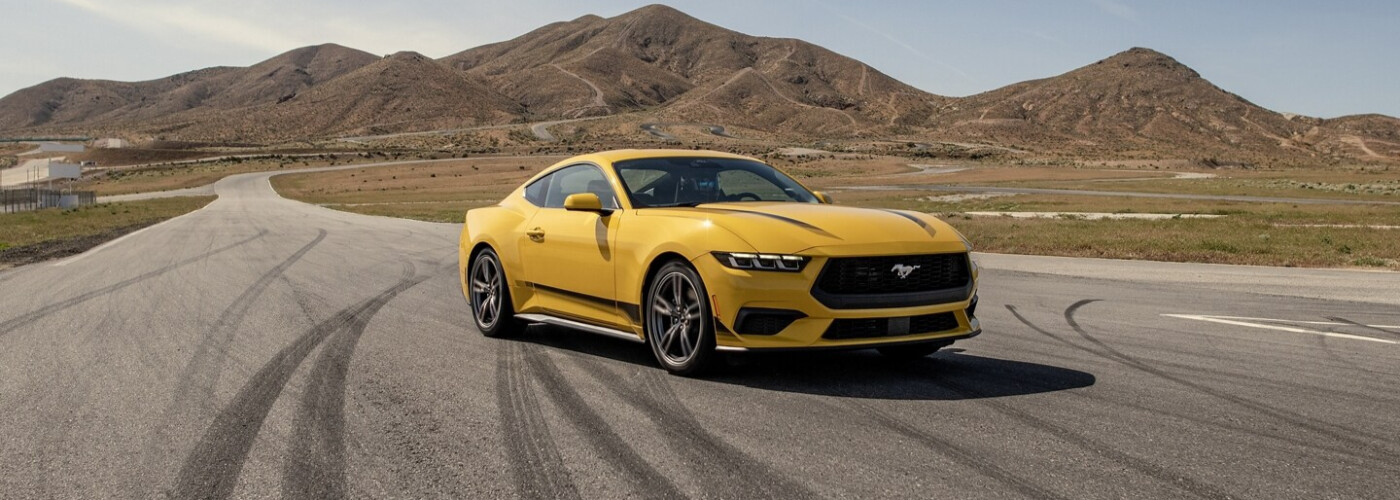
Ford EcoBoost is a family of turbocharged gasoline engines designed to deliver strong horsepower and torque while improving fuel efficiency compared with what might otherwise require a larger-displacement engine. EcoBoost technology combines turbocharging, direct fuel injection, and variable camshaft timing to optimize engine performance under different driving conditions. These engines are available across numerous Ford vehicles, including the Mustang, Maverick, Ranger, F-150, Bronco, Explorer, and Expedition. Engine sizes and performance capabilities vary by model, giving drivers options for everyday commuting, highway travel, towing, and off-road driving. At Sid Dillon, Nebraska drivers can explore Ford vehicles equipped with EcoBoost engines and compare their performance, fuel economy, and capabilities. Understanding how EcoBoost works and how it differs from traditional engines can help you select the right Ford for your driving needs.
What Is a Ford EcoBoost Engine?
A Ford EcoBoost engine is a gasoline-powered engine that uses turbocharging and advanced fuel management technology to generate substantial power from a relatively compact engine displacement. Introduced by Ford to balance performance and fuel consumption, EcoBoost engines are designed to produce the torque and horsepower drivers expect while making efficient use of fuel under suitable operating conditions.
Traditional naturally aspirated engines rely on atmospheric pressure to draw air into their cylinders. EcoBoost engines use a turbocharger to compress incoming air, allowing more oxygen to enter the combustion chambers. With the appropriate amount of fuel, this additional air supports greater power output without necessarily requiring a larger engine.
For example, the 2026 Ford F-150 offers a 2.7L EcoBoost V6 producing 325 horsepower and 400 lb-ft of torque, along with an available 3.5L EcoBoost V6 producing 400 horsepower and 500 lb-ft of torque. These engines demonstrate how turbocharging can provide the power needed for a full-size pickup without relying exclusively on larger-displacement V8 engines.
EcoBoost is not a single engine size or configuration. Ford offers several EcoBoost engines with different displacements, cylinder arrangements, and performance characteristics. The appropriate engine depends on the vehicle’s size, intended use, and desired combination of acceleration, towing capability, and fuel economy.
How Does Ford EcoBoost Technology Work?
Ford EcoBoost technology combines three primary engine systems: turbocharging, direct fuel injection, and twin independent variable camshaft timing (Ti-VCT). These technologies work together to manage airflow, fuel delivery, and combustion efficiency, helping the engine produce responsive power across a range of driving conditions.
- Twin Independent Variable Camshaft Timing (Ti-VCT): This system continuously adjusts the timing of the intake and exhaust valves according to engine speed and load. By controlling when the valves open and close, the engine can optimize airflow, improve torque delivery, and help reduce unnecessary fuel consumption during lighter-load driving.
- Turbocharged Performance: A turbocharger uses energy from engine exhaust gases to spin a turbine connected to a compressor. The compressor forces additional air into the engine, allowing more fuel to be burned when additional power is needed. This increases the power potential of a smaller-displacement engine and supports responsive acceleration and strong torque output.
- Direct Fuel Injection: Direct injection delivers precisely controlled amounts of gasoline directly into the combustion chamber rather than spraying fuel into the intake port. This allows the engine management system to control fuel delivery according to operating conditions, supporting efficient combustion, power production, and throttle response.
These systems operate together through the engine’s electronic control system. During light acceleration or steady highway cruising, the engine can operate with relatively low power demand. During acceleration, climbing hills, or towing, the turbocharger increases the available airflow to support greater engine output. Actual fuel economy still depends on driving habits, vehicle weight, road conditions, and engine workload.
Some EcoBoost engines also incorporate additional technologies, including automatic engine stop-start systems, that can help reduce fuel consumption during certain operating conditions. Equipment and operating characteristics vary by model year and engine configuration.
Which Ford Vehicles Have EcoBoost Engines?
EcoBoost engines are available across much of the 2026 Ford lineup, including compact pickups, sports cars, midsize trucks, SUVs, and full-size pickups. Engine displacement and performance capabilities differ significantly between models, so comparing the specific engine and vehicle configuration is important.
Examples of 2026 Ford vehicles equipped with EcoBoost technology include:
- 2026 Ford Maverick: The available 2.0L EcoBoost engine provides a turbocharged gasoline alternative to the Maverick’s hybrid powertrain. It is suited for drivers seeking responsive acceleration and compact pickup capability.
- 2026 Ford Escape: The 1.5L EcoBoost engine is available on select Escape configurations, providing a balance of everyday performance and fuel efficiency for commuting and highway driving.
- 2026 Ford Mustang: The 2.3L EcoBoost engine produces 315 horsepower and 350 lb-ft of torque in the EcoBoost Fastback and Convertible, offering turbocharged sports car performance.
- 2026 Ford Ranger: The 2.3L EcoBoost is standard on XL, XLT, and Lariat models, while the 2.7L EcoBoost V6 is available on XLT and Lariat. The Ranger Raptor features a 3.0L EcoBoost V6 for higher-performance off-road driving.
- 2026 Ford Bronco Sport: The Big Bend, Heritage, and Outer Banks models feature a 1.5L EcoBoost engine, while the Badlands uses a more powerful 2.0L EcoBoost engine.
- 2026 Ford Explorer: The 2.3L EcoBoost engine is available in several Explorer configurations, while the 3.0L EcoBoost V6 provides additional performance in select models.
- 2026 Ford Bronco: The 2.3L EcoBoost engine is available across multiple Bronco configurations, with additional EcoBoost V6 options on select models for drivers seeking more power or specialized off-road performance.
- 2026 Ford Expedition: The 3.5L EcoBoost V6 delivers turbocharged performance designed for full-size SUV passenger capacity, highway travel, and towing. A higher-output version is available on select configurations.
- 2026 Ford F-150: The lineup includes the 2.7L EcoBoost V6, 3.5L EcoBoost V6, and high-output 3.5L EcoBoost V6 on the Raptor. Engine availability varies by trim and configuration.
These examples show that EcoBoost is not limited to performance-oriented vehicles. Ford uses the technology across vehicles designed for different purposes, including compact transportation, family travel, commercial work, and recreational driving.
Engine availability can change between model years, trim levels, and vehicle configurations. Review the specifications of individual vehicles when comparing EcoBoost options.
How Much Horsepower and Torque Do EcoBoost Engines Produce?
Ford EcoBoost horsepower and torque depend on engine displacement, turbocharger configuration, and the vehicle in which the engine is installed. Smaller EcoBoost engines can deliver responsive everyday performance, while larger EcoBoost V6 engines provide substantial torque for towing, hauling, and performance-oriented driving.
The following examples illustrate the different performance levels available in select 2026 Ford vehicles:
- 2026 Ford Mustang 2.3L EcoBoost: 315 horsepower and 350 lb-ft of torque. This turbocharged four-cylinder engine provides strong acceleration in the Mustang EcoBoost Fastback and Convertible.
- 2026 Ford F-150 2.7L EcoBoost V6: 325 horsepower and 400 lb-ft of torque. This engine provides a balance of everyday truck performance and available towing capability.
- 2026 Ford F-150 3.5L EcoBoost V6: 400 horsepower and 500 lb-ft of torque. Its higher torque output supports demanding pickup applications, including towing and hauling when properly equipped.
- 2026 Ford F-150 Raptor 3.5L High-Output EcoBoost V6: 450 horsepower and 510 lb-ft of torque. This version is engineered for high-performance truck driving and specialized off-road capability.
Horsepower describes the rate at which an engine performs work, while torque measures rotational force. In everyday driving, torque contributes to acceleration, especially when moving a loaded vehicle or pulling a trailer. Horsepower becomes particularly important when sustaining acceleration and operating at higher engine speeds.
A higher horsepower or torque rating does not automatically mean a vehicle will have the greatest towing capacity or the best fuel economy. Transmission gearing, drivetrain configuration, cooling systems, axle ratios, vehicle weight, and available towing equipment all influence overall capability.
What Are the Benefits of Ford EcoBoost Engines?
The primary benefits of Ford EcoBoost engines include strong power output relative to engine size, responsive acceleration, and the potential for improved fuel efficiency compared with larger naturally aspirated engines offering similar performance. These advantages make EcoBoost technology suitable for a wide range of vehicles and driving requirements.
- Strong Power From Smaller Engines: Turbocharging allows an engine to generate more horsepower and torque than its displacement alone might suggest. For example, a 2.7L EcoBoost V6 can produce substantial torque in a full-size Ford F-150.
- Responsive Acceleration: Turbocharged engines can deliver strong low- and mid-range torque, helping vehicles accelerate during highway merging, passing, and everyday driving.
- Potential Fuel Economy Advantages: Smaller-displacement engines may consume less fuel during lighter-load operation than larger engines with comparable performance capabilities. Actual savings depend on engine design, vehicle configuration, and driving conditions.
- Towing and Hauling Capability: Larger EcoBoost engines produce the torque needed for demanding tasks. Properly equipped Ford trucks and SUVs can use this output to support trailer towing and cargo transportation.
- Versatile Applications: EcoBoost technology is available in several engine sizes, allowing Ford to match different performance characteristics with compact vehicles, sports cars, SUVs, and trucks.
- Performance at Different Elevations: Because turbochargers compress incoming air, they can help reduce some of the power loss naturally aspirated engines experience at higher elevations. Actual performance still depends on environmental conditions and engine operating limits.
For Nebraska drivers traveling between Omaha, Lincoln, Fremont, and surrounding communities, an EcoBoost-equipped Ford can provide the flexibility needed for daily commuting, highway trips, and occasional heavier workloads. Those who regularly tow trailers or transport equipment should compare specific engine options and vehicle towing ratings before choosing a model.
EcoBoost vs. Naturally Aspirated Engines: What’s the Difference?
The main difference between Ford EcoBoost and naturally aspirated engines is how air enters the engine. EcoBoost engines use turbochargers to compress incoming air, while naturally aspirated engines draw air into the cylinders without forced induction. This allows EcoBoost engines to produce substantial power with relatively small engine displacement.
Here are the primary differences between the two engine designs:
- Power Delivery: EcoBoost engines use turbocharging to increase airflow and produce strong torque relative to their size. Naturally aspirated engines develop power without turbocharger assistance, often offering a more linear relationship between engine speed and power output.
- Fuel Efficiency: A smaller EcoBoost engine may achieve better fuel economy than a larger naturally aspirated engine with similar performance. However, sustained high-load driving can increase fuel consumption significantly, and the actual advantage varies by vehicle.
- Engine Displacement: Turbocharging can allow smaller EcoBoost engines to deliver performance comparable to larger engines. Engine size alone is not a reliable indicator of overall power or capability.
- Mechanical Design: EcoBoost engines incorporate turbocharging equipment, including components for managing compressed intake air and exhaust flow. Naturally aspirated engines do not require turbochargers, although both designs may use sophisticated fuel injection and valve timing systems.
- Driving Characteristics: EcoBoost engines can provide strong torque over a broad operating range, while naturally aspirated engines may offer different throttle response and power delivery characteristics depending on their design.
For example, the 2026 Ford F-150 offers both EcoBoost V6 engines and a naturally aspirated 5.0L V8. The 3.5L EcoBoost V6 produces 400 horsepower and 500 lb-ft of torque, while the 5.0L V8 produces 400 horsepower and 410 lb-ft of torque. Although both engines produce the same rated horsepower, the EcoBoost V6 generates more peak torque.
Neither engine type is automatically better for every driver. The ideal choice depends on expected driving conditions, preferred engine characteristics, towing requirements, fuel economy priorities, and vehicle availability.
Are Ford EcoBoost Engines Fuel Efficient?
Ford EcoBoost engines are designed to balance fuel economy with strong performance, but their actual efficiency depends on the vehicle, engine size, drivetrain, and operating conditions. Turbocharging allows Ford to use smaller-displacement engines in applications that might otherwise require larger engines, potentially reducing fuel consumption during lighter-load driving.
EPA-estimated fuel economy differs among EcoBoost-equipped Ford models. For example, a compact Ford Maverick with a 2.0L EcoBoost engine will have different fuel consumption characteristics than a full-size Expedition with a 3.5L EcoBoost V6. Even within the same model, fuel economy may change with four-wheel drive, axle ratios, tire choices, and other equipment.
Several factors influence real-world EcoBoost fuel efficiency:
- Driving Habits: Frequent hard acceleration increases engine load and fuel consumption. Smooth acceleration and consistent speeds can help improve efficiency.
- Highway and City Conditions: Stop-and-go traffic, extended idling, highway speeds, and road congestion affect fuel consumption differently.
- Towing and Cargo Weight: Pulling trailers or carrying heavy loads requires additional engine output and can significantly reduce fuel economy.
- Weather and Road Conditions: Cold temperatures, winter fuel formulations, snow-covered roads, and strong winds can increase fuel consumption in Nebraska.
- Vehicle Maintenance: Proper tire inflation, recommended engine oil, clean air filtration, and scheduled maintenance help the vehicle operate as intended.
For the most accurate comparison, review the EPA-estimated city, highway, and combined MPG ratings for the exact model year, engine, drivetrain, and configuration you are considering. EPA estimates are standardized comparisons, and actual mileage will vary.
Do Ford EcoBoost Engines Require Premium Gas?
Many Ford EcoBoost engines are designed to operate on regular unleaded gasoline with an octane rating of 87, but fuel requirements and recommendations vary by engine and vehicle. Some EcoBoost applications recommend premium fuel for maximum advertised performance, particularly under demanding driving conditions.
Higher-octane gasoline provides greater resistance to engine knock, which can be important in turbocharged engines operating under higher cylinder pressures. When an engine is designed to accommodate multiple fuel grades, its electronic controls may adjust operating parameters based on fuel quality and driving conditions.
Using premium gasoline does not necessarily improve fuel economy enough to offset its higher cost. Always follow the fuel requirements and recommendations in the owner’s manual for your specific Ford model and engine. Certain performance-oriented EcoBoost applications may have different recommendations than everyday passenger vehicles.
Explore Ford EcoBoost Vehicles at Sid Dillon
Sid Dillon offers Nebraska drivers the opportunity to explore Ford vehicles equipped with EcoBoost engines at our Ford dealership locations in Crete and Wahoo. Drivers shopping for a Mustang, Ranger, F-150, Bronco, or another EcoBoost-equipped Ford can compare available engine options, performance specifications, and features to determine which configuration fits their needs.
For drivers who regularly commute around Lincoln or Omaha, a smaller EcoBoost engine may provide the desired balance of acceleration and fuel economy. Those who need a vehicle for towing, hauling, or recreational travel may prefer a larger EcoBoost engine with additional torque and appropriately equipped towing capabilities.
Explore our new vehicle inventory to see available Ford models and engine configurations. You can also review our Ford F-150 overview or Ford Bronco overview for additional information about these model-year-specific vehicles.
If you have questions about EcoBoost technology, engine maintenance, fuel recommendations, or choosing a Ford vehicle, contact our experts at Sid Dillon. Our team can help you compare available options and learn more about the benefits of Ford EcoBoost performance.
Frequently Asked Questions About Ford EcoBoost Engines
What does EcoBoost mean on a Ford vehicle?
EcoBoost is Ford’s name for a family of gasoline engines that combine turbocharging, direct fuel injection, and variable camshaft timing to balance performance and fuel efficiency. The technology allows smaller-displacement engines to produce substantial horsepower and torque by compressing incoming air and controlling fuel delivery. EcoBoost engines are available in several Ford cars, trucks, and SUVs, with specifications varying by model and engine configuration.
Is a Ford EcoBoost engine a V6 or a four-cylinder?
Ford offers EcoBoost engines in several configurations, including three-cylinder, four-cylinder, and V6 designs. The engine configuration depends on the vehicle and specific powertrain. For example, the 2026 Ford Mustang EcoBoost uses a turbocharged 2.3L four-cylinder engine, while the 2026 Ford F-150 offers 2.7L and 3.5L EcoBoost V6 engines. EcoBoost describes the underlying engine technology rather than a specific cylinder count.
Are Ford EcoBoost engines good for towing?
Yes, several Ford EcoBoost engines are well suited for towing because turbocharging helps generate substantial torque. The 2026 Ford F-150 offers a 3.5L EcoBoost V6 producing 500 lb-ft of torque, while properly equipped 2026 Ford Ranger XL, XLT, and Lariat models can tow up to 7,500 pounds. Towing capacity depends on the specific vehicle, drivetrain, axle ratio, equipment, and trailer configuration. Always consult the vehicle’s towing guide and applicable ratings before towing.
Do EcoBoost engines get better gas mileage than V8 engines?
EcoBoost engines can achieve better fuel economy than some larger naturally aspirated V8 engines, particularly during lighter-load driving, but the difference depends on the vehicle and operating conditions. A smaller turbocharged engine may require less fuel when cruising or commuting, while aggressive acceleration, towing, and heavy loads can increase consumption substantially. Compare EPA-estimated MPG figures for the exact Ford model, engine, and drivetrain rather than assuming every EcoBoost engine is more efficient than every V8.
Do Ford EcoBoost engines require special maintenance?
Ford EcoBoost engines require regular maintenance according to the manufacturer’s recommended schedule, including engine oil and filter changes, cooling system inspections, and other applicable services. Because EcoBoost engines use turbochargers and direct injection, proper lubrication, recommended oil specifications, and routine maintenance are especially important. Maintenance requirements vary by engine and model year, so follow the vehicle’s owner’s manual and maintenance schedule. A Sid Dillon service team can help explain the recommended maintenance for your particular Ford.
Is EcoBoost better than a traditional Ford V8 engine?
EcoBoost and traditional naturally aspirated Ford V8 engines offer different advantages, and neither is universally better. EcoBoost engines use turbocharging to produce strong power and torque relative to their displacement, while naturally aspirated V8 engines offer different power delivery and driving characteristics. For example, the 2026 Ford F-150’s 3.5L EcoBoost V6 and 5.0L V8 both produce 400 horsepower, but the EcoBoost generates 500 lb-ft of torque compared with 410 lb-ft for the V8. Your preferred engine will depend on towing needs, driving habits, fuel economy priorities, and personal preferences.
Have a Question? Ask Our Experts Anything!
More From Sid Dillon
November Chevy Lease Specials
November Chevrolet Lease Specials: Find Your Next Chevy at Sid Dillon Take on the season with confidence and discover November Chevrolet lease specials at Sid Dillon. Nebraska drivers can explore limited-time offers on four featured vehicles, including the versatile 2027 Equinox LT AWD, dependable 2026 Silverado 1500 LT 4WD, premium Silverado 1500 LTZ 4WD, and…
November Ford of Wahoo Lease Specials
November Ford Deals on SUVs and Trucks in Wahoo, NE Discover November savings on four new 2026 Ford vehicles at Sid Dillon Ford of Wahoo. This month’s featured offers include the trail-ready Ford Bronco Big Bend 4×4, versatile Bronco Sport Big Bend, family-friendly Explorer Active 4WD, and hardworking F-150 XLT 4×4. Each model offers distinctive…
November Buick of Lincoln Lease Specials
November Buick Lease Specials in Lincoln, NE Discover refined design, thoughtful versatility, and exceptional value with November Buick lease and purchase offers at Sid Dillon Buick of Lincoln. This month’s featured SUVs include the spacious 2027 Buick Enclave Preferred FWD and the stylish 2026 Buick Envista Preferred FWD. The Enclave delivers three rows of seating,…
